We'd love to discuss your project in detail. Use our online scheduling tool to book a meeting at your convenience:


Four live activations put teamwork, focus and competition into play. Explore the games, the results, and what we learned at GPTW Conference 2026.


Open a lesson for the observation, a useful design choice, and what to measure next.
What we observedThe ball activity let pairs choose how to coordinate and see whether their approach worked. The quiz gave participants a shared challenge and a visible score.
How to use itGive people a clear goal, a choice in how to participate, and feedback they can act on.
What to measureTrack repeat attempts and voluntary participation—not just how many people started.
What we observedReported ball activity success rose from about 60% on the first attempt to over 90% on the second. This is an observed retry improvement, not a controlled estimate of learning.
How to use itKeep the feedback immediate and the reset short. Let participants try a different approach while the first attempt is still fresh.
What to measureCompare first and second attempts using the same success rule and record how many pairs retry.
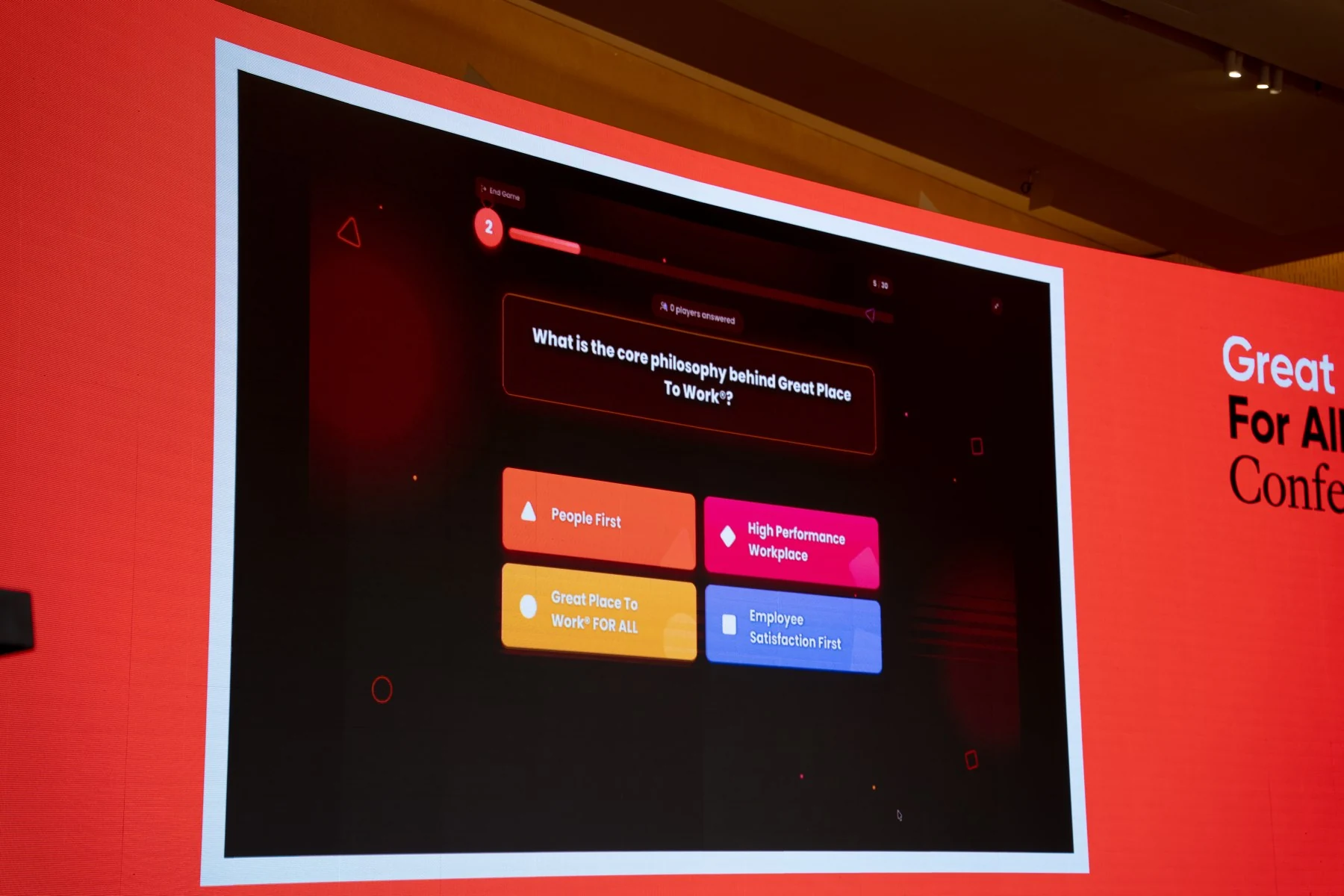
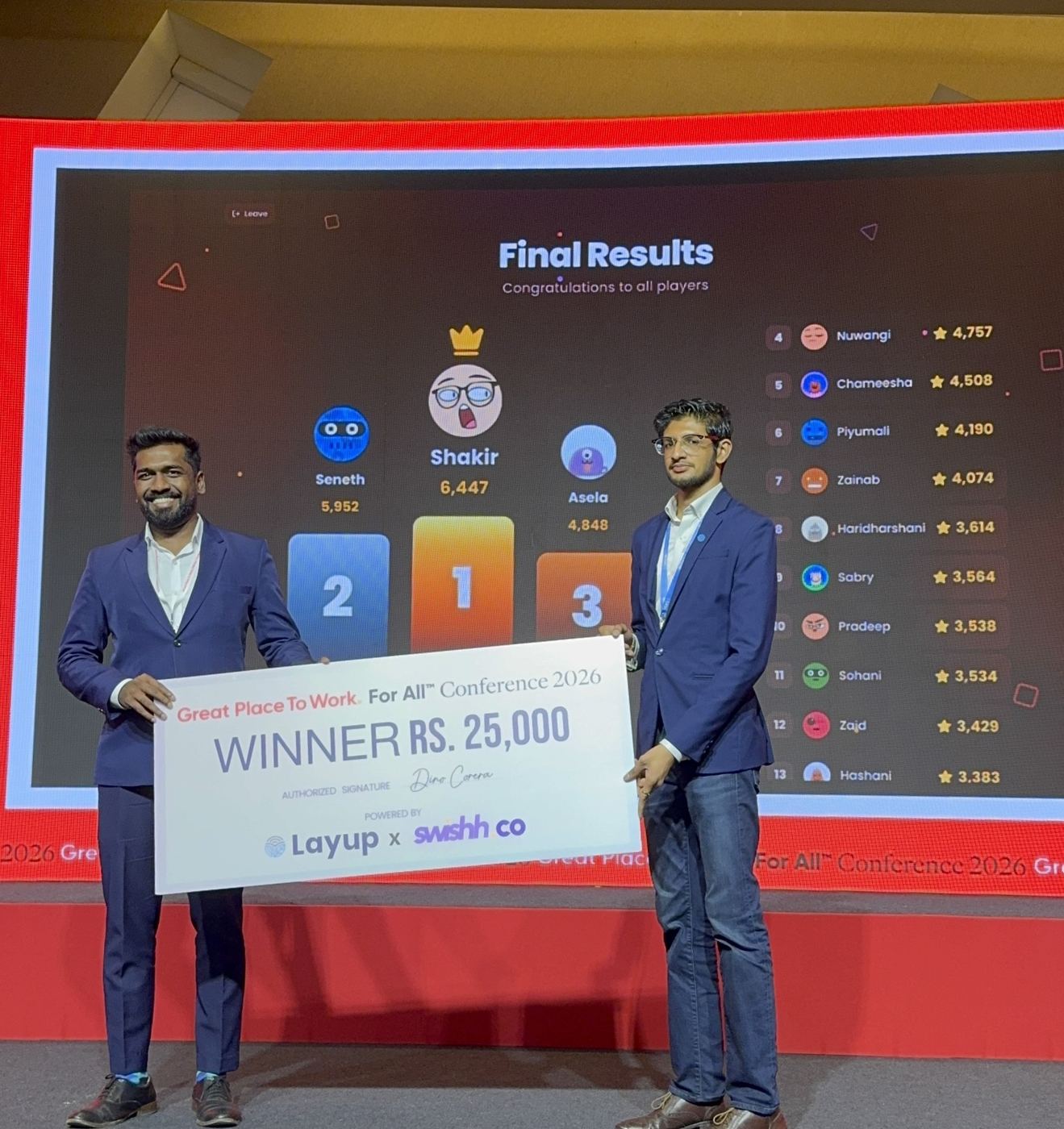
What we observedThe gala quiz recorded 205 attempts from 192 unique participants, with an average of 7.3 of 8 questions answered. Attempts and people are different measures.
How to use itExplain scoring before the game. Make progress visible, and consider team scoring when individual ranking could discourage participation.
What to measureReview completion and score spread alongside participation; a busy leaderboard alone does not show learning.
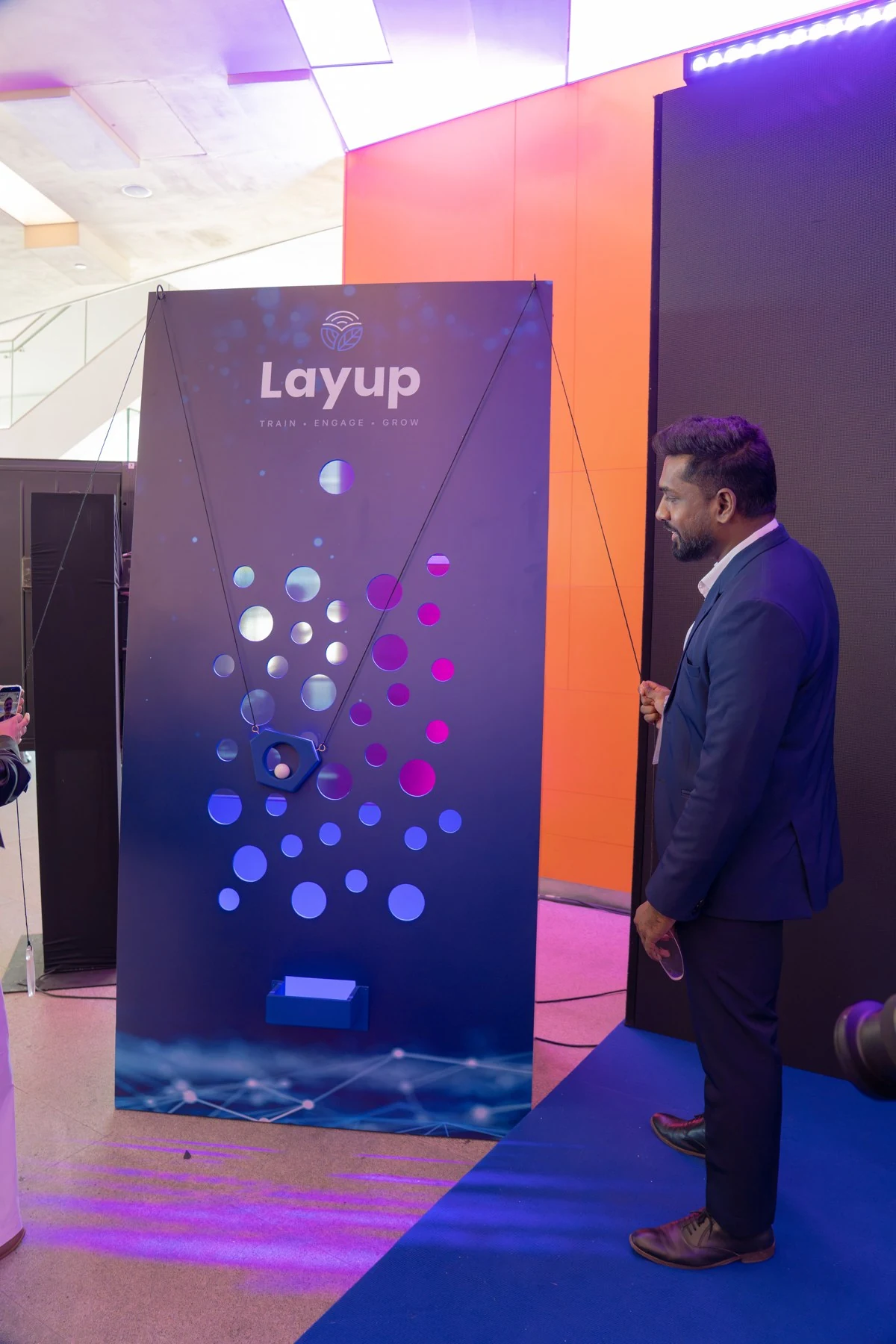
What we observedThe ball wall required two players to coordinate their movements. The shared task gave them a concrete reason to communicate.
How to use itGive both partners an active role, then ask a short debrief: what changed between attempts, and what did your partner do that helped?
What to measureObserve whether both people contribute and whether their coordination improves on a retry.
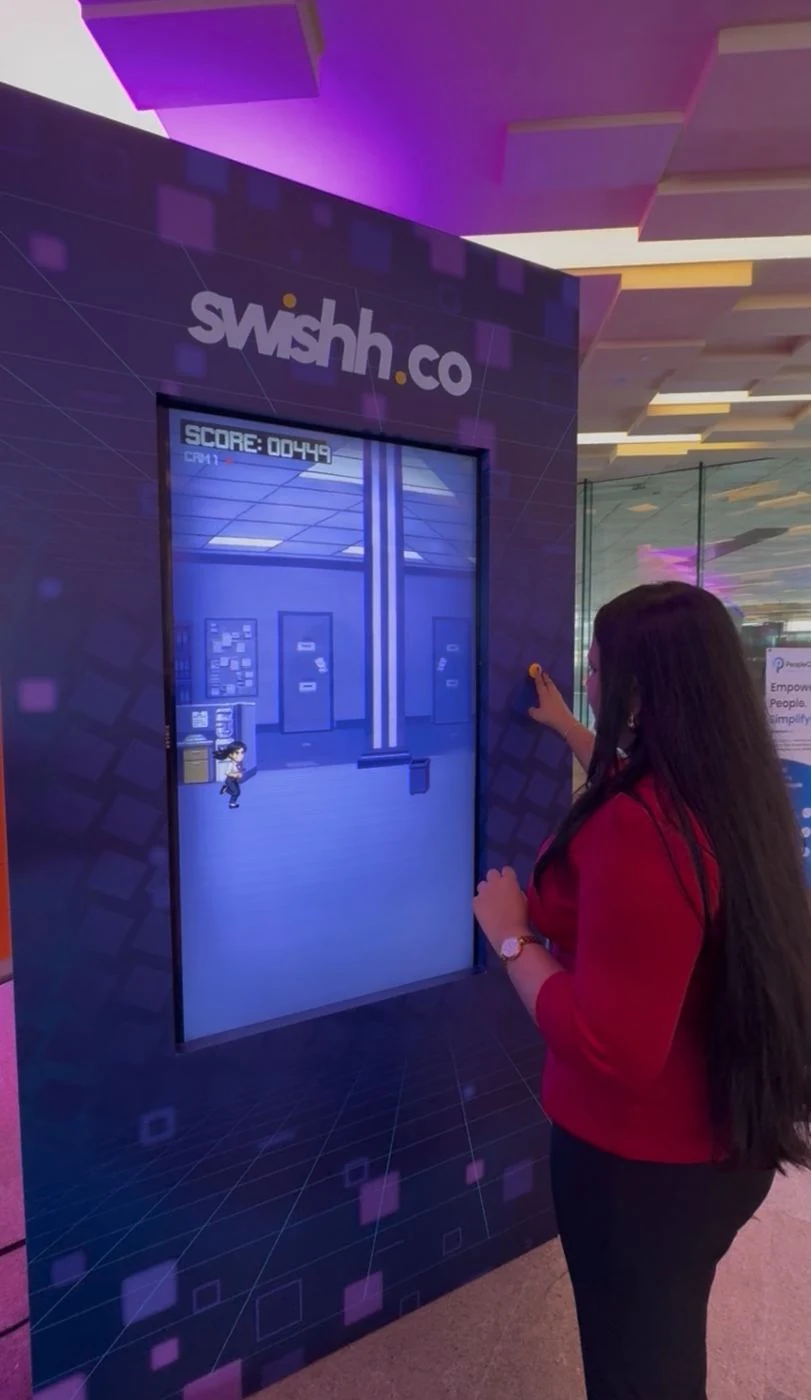
What we observedAbout 40% completed the office obstacle course. That suggests a demanding game; it does not by itself prove sustained attention or frustration.
How to use itFor broad participation, add a practice round and a gentler opening. For a challenge format, explain the difficulty and make retries easy.
What to measurePair completion rates with a quick difficulty rating and a question about whether people want to play again.
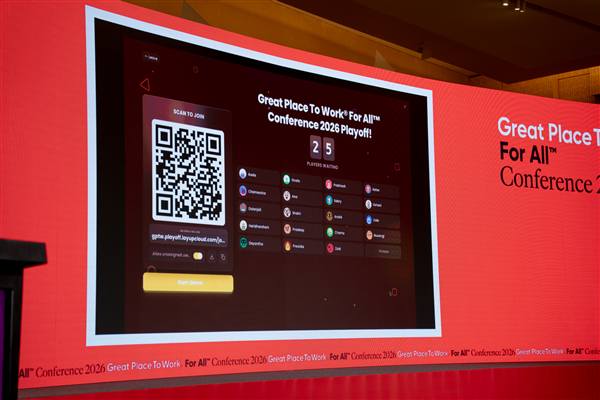
The live session generated 772 answers. For future events, track joining delays and completion separately to understand where people need support.
How to use itTest a realistic burst of logins from a shared venue network. Offer simple joining instructions and keep help visible.
What to measureTrack each joining step, sign-in latency, errors, and final-question participation separately.


Two players guided a ball up through a series of holes without dropping it—succeeding required real-time communication, not individual skill.
150+ participants · 75+ pairs


Jump over office obstacles, dodge distractions, and make it to the finish. Try the live game below.
Tap or press Space to play in the screen above
The course was too demanding for an “everyone wins” moment.
Next time: a practice round, a gentler start, and easier retries.


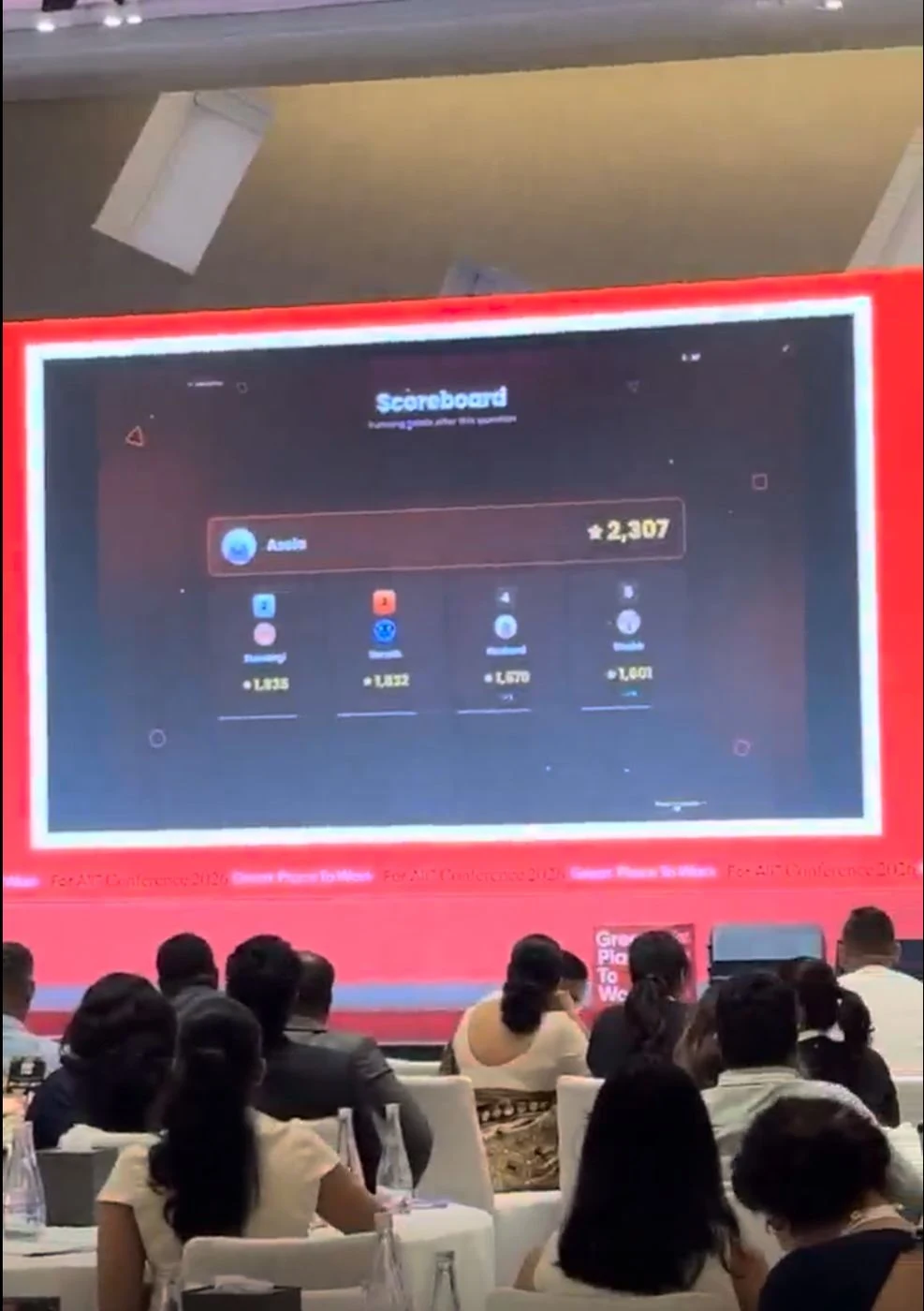
A room of senior leaders. Eight questions. One shared reason to compete.

Meet the Distractopus: eight arms, endless interruptions. Players dodged this animated troublemaker to stay focused—and it became the mascot for the evening’s quiz.
192 unique participants made 205 attempts — 13 attempts beyond one per person.



A live, quiz-based competition testing general knowledge from across the conference, played simultaneously by the room on a shared leaderboard.


Start with a clear goal and immediate feedback.
Make retries quick and easy.
Match the difficulty to the audience.
Use shared challenges to connect unfamiliar groups.
Test simultaneous sign-ins on the venue network.
Make the same experience accessible beyond the room.


Click a card to see contact details.